
The Complete Trade Show Guide: What to Do Before, During and After the Event

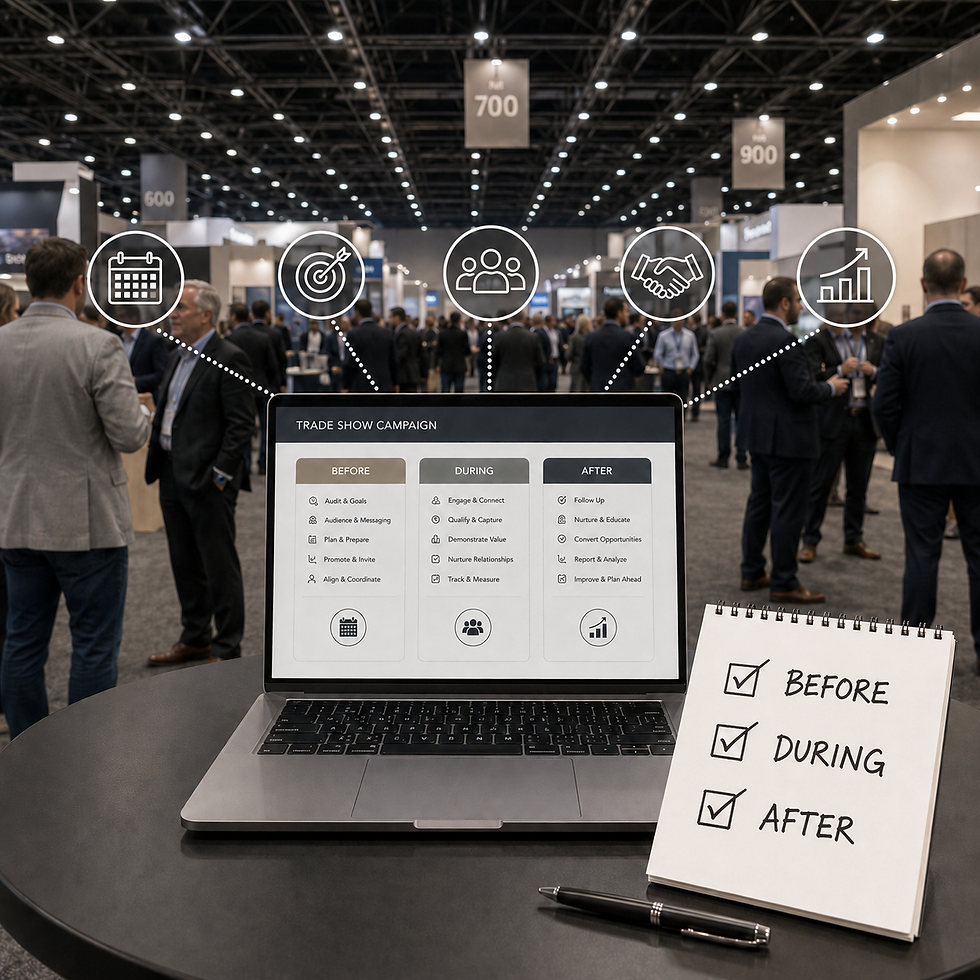
Trade shows can represent a major investment.
Between exhibit space, booth design, travel, shipping, sponsorships, promotional products, and employee time, the cost adds up quickly. Yet many companies still approach the event with little more than a booth, a few brochures, and the hope that the right people will stop by.
A successful trade show should be treated as a complete marketing campaign—not a three-day event.
The work begins well before the show opens and continues after the booth has been packed away.
Before the Trade Show
Establish a Clear Objective
Start by deciding what the company needs to accomplish.
Your goals may include:
Generating qualified leads
Meeting with existing customers
Introducing a new product
Entering a new market
Strengthening distributor or representative relationships
Scheduling product demonstrations
Building brand awareness
Recruiting employees or channel partners
Gathering market intelligence
Supporting a manufacturer or supplier relationship
Choose the objectives that matter most and establish how progress will be measured.
“We want a lot of booth traffic” is not a complete goal. A better goal might be to schedule 20 customer meetings, capture 75 qualified leads, demonstrate a new product 40 times, or create 10 follow-up opportunities for each salesperson.
Build the Campaign Around One Primary Message
Trade show attendees are surrounded by competing signs, screens, products, and conversations. Your booth has only a few seconds to communicate why someone should stop.
Do not try to place every company capability on the booth wall.
Choose one clear message that answers:
Who do we help?
What problem do we solve?
What are we featuring?
Why should someone care?
What should they do next?
The message should be easy to understand from the aisle. Supporting information can be introduced once the conversation begins.
Plan the Complete Experience
Think beyond the physical booth.
Determine what will happen when someone arrives:
What will attract their attention?
What will they see first?
What product or solution will be featured?
Will there be a demonstration?
Who will greet them?
What questions will the team ask?
How will contact information be captured?
What will the visitor receive?
What should happen after the conversation?
Every part of the experience should support the same goal and message.
Create the Right Trade Show Materials
Depending on the event, you may need:
Booth graphics and signage
Product displays
Demonstration videos
Sales presentations
Brochures and product literature
Case studies
QR codes and landing pages
Promotional products
Appointment cards
Email campaigns
Social media graphics
Digital follow-up resources
Lead-capture forms
Avoid bringing materials simply because they have always been taken to trade shows. Every item should have a purpose.
A focused product guide or useful technical resource may be more valuable than a general company brochure. A QR code should lead to a page created for the event—not merely send visitors to the website’s homepage.
Promote Your Presence Before the Show
Do not depend entirely on people discovering the booth once they arrive.
Begin communicating several weeks before the event through:
Customer and prospect emails
Sales team outreach
Social media
Website announcements
Distributor and representative communication
Digital advertising
Industry publications
Association channels
Appointment invitations
Tell people where you will be, what they will see, and why visiting your booth will be worth their time.
“Come see us at Booth 417” is not enough. Give them a reason to make the stop.
Schedule Meetings in Advance
Your best trade show conversations may be the ones planned before the show begins.
Ask salespeople to identify priority customers, prospects, partners, and manufacturers they want to meet. Begin outreach early and schedule appointments whenever possible.
Prearranged meetings create more certainty around the event and reduce dependence on unpredictable booth traffic.
Prepare the Booth Team
Everyone working the booth should understand:
The primary objective
The featured message
The products or services being promoted
The audience you want to reach
The questions they should ask
How leads will be captured
How leads should be classified
Who is responsible for follow-up
What should not be discussed publicly
Do not wait until the team is standing in the booth to explain the plan.
A short pre-show training session can prevent inconsistent messaging, incomplete lead information, and missed opportunities.
Build the Follow-Up Plan Before Leaving
Decide what will happen to every lead before the show begins.
Create the email templates, sales resources, lead categories, CRM fields, and internal responsibilities in advance. Determine who will receive each type of lead and how quickly the first communication should occur.
Waiting until everyone returns exhausted from the event is how valuable opportunities get lost.
During the Trade Show
Make the Booth Easy to Approach
Booth staff should be standing, attentive, and ready to engage.
Phones, laptops, private conversations, and groups of employees blocking the entrance can make visitors feel as though they are interrupting.
A simple welcome and an open-ended question can begin the conversation:
What brought you to the show?
What type of projects are you working on?
Are you familiar with this product?
What challenges are you seeing in the field?
Which solutions are you hoping to find?
The goal is not to deliver the same sales pitch to everyone. It is to understand who the visitor is and whether there is a meaningful reason to continue the conversation.
Qualify Instead of Collecting
A large stack of scanned badges does not automatically represent a successful show.
Capture information that helps the sales team understand the opportunity:
What is the person interested in?
What problem are they trying to solve?
What is their role?
What company or market do they represent?
Is there an active project or timeline?
What follow-up was promised?
Who should own the next step?
Classify leads by priority so the strongest opportunities receive immediate attention.
Give People a Reason to Remember You
Useful demonstrations, strong visual storytelling, clear product comparisons, interactive content, or helpful technical resources can make the booth more memorable.
Promotional products can support the experience, but the giveaway should not become the entire experience.
The goal is for visitors to remember the company, message, or product—not simply the item they picked up.
Create Content From the Event
A trade show provides a valuable opportunity to capture original content.
Consider collecting:
Product demonstrations
Short interviews
Customer or partner conversations
Employee perspectives
Booth photographs
New product footage
Industry observations
Daily event recaps
Frequently asked questions
Leadership commentary
This content can support social media, newsletters, sales follow-up, recruiting, future event promotion, and post-show articles.
Always obtain the appropriate permission before recording or featuring customers, partners, or other attendees.
Stay Connected With the Team
Schedule short check-ins during the event to discuss:
Which messages are resonating?
What questions are people asking?
Are the right attendees visiting?
Are leads being captured correctly?
Does the booth need more materials?
Are there important conversations that require immediate follow-up?
Small adjustments made during the show can improve the remaining days.
After the Trade Show
Follow Up Quickly and Personally
Trade show attendees return to full inboxes, delayed work, and messages from every exhibitor they visited.
Generic follow-up makes your company easy to ignore.
Use the notes captured during the conversation to make the communication relevant. Mention the product, problem, project, question, or next step that was discussed.
High-priority opportunities should receive direct personal outreach. Other contacts may enter an organized email follow-up or nurturing campaign based on their interests.
The speed of follow-up matters, but relevance matters just as much.
Give Sales the Tools to Continue the Conversation
Make sure the sales team has access to the resources promised during the show.
That may include:
Product information
Technical documents
Case studies
Recorded demonstrations
Pricing or proposal information
Samples
Presentation materials
Contact information
Event photographs
Relevant website pages
Marketing should help organize the information so salespeople can respond quickly and consistently.
Continue the Campaign
The trade show should produce more than one follow-up email.
Post-show content may include:
Event recaps
Product demonstration videos
Key takeaways
Customer questions
Educational articles
Social media posts
Follow-up webinars
Sales presentations
Retargeting campaigns
Product-specific email sequences
Continue communicating with attendees who showed interest but were not yet ready for a sales conversation.
Hold a Post-Show Debrief
Meet with the booth and sales teams while the event is still fresh.
Discuss:
What worked well?
Which message received the strongest response?
What questions did attendees ask?
Which products generated the most interest?
Were the right people at the show?
Did the booth layout support conversations?
Were the materials useful?
Did the lead-capture process work?
What should change before the next event?
Document the findings so the next trade show does not begin with the team repeating the same mistakes.
Measure the Complete Impact
Trade show success should be evaluated against the objectives established at the beginning.
Depending on the goal, that may include:
Qualified leads
Customer meetings
Product demonstrations
New opportunities
Pipeline value
Quotes or proposals
Distributor or representative conversations
Website visits
Landing-page conversions
Content engagement
Sales influenced by the event
Relationships strengthened
Revenue may take months to develop in industries with long sales cycles. Continue tracking the leads and opportunities influenced by the show instead of closing the report after the first week.
A Practical Trade Show Timeline
12–16 Weeks Before
Set goals, reserve the booth, establish the message, and identify major creative or production needs.
8–12 Weeks Before
Develop booth graphics, supporting materials, landing pages, promotional products, demonstrations, and the pre-show campaign.
4–6 Weeks Before
Begin customer outreach, launch event promotion, schedule meetings, and confirm shipping and logistical details.
1–2 Weeks Before
Train the booth team, test technology, finalize schedules, prepare lead capture, and confirm the follow-up process.
During the Event
Engage attendees, qualify leads, document conversations, capture content, and hold brief team check-ins.
Within 24–48 Hours After
Send priority follow-ups, distribute leads, provide promised materials, and begin post-show communication.
Within 1–2 Weeks After
Hold the debrief, review initial results, continue nurturing leads, and repurpose event content.
Turn the Trade Show Into a Complete Campaign
A booth alone cannot deliver the full value of a trade show.
The strongest results come from connecting the strategy, message, booth design, promotion, sales preparation, lead capture, content creation, and follow-up into one coordinated effort.
Bran helps companies develop complete trade show campaigns—from the initial strategy and booth creative to pre-show promotion, sales materials, video, social content, and post-show follow-up.
Plan Your Next Trade Show With Bran


Comments